
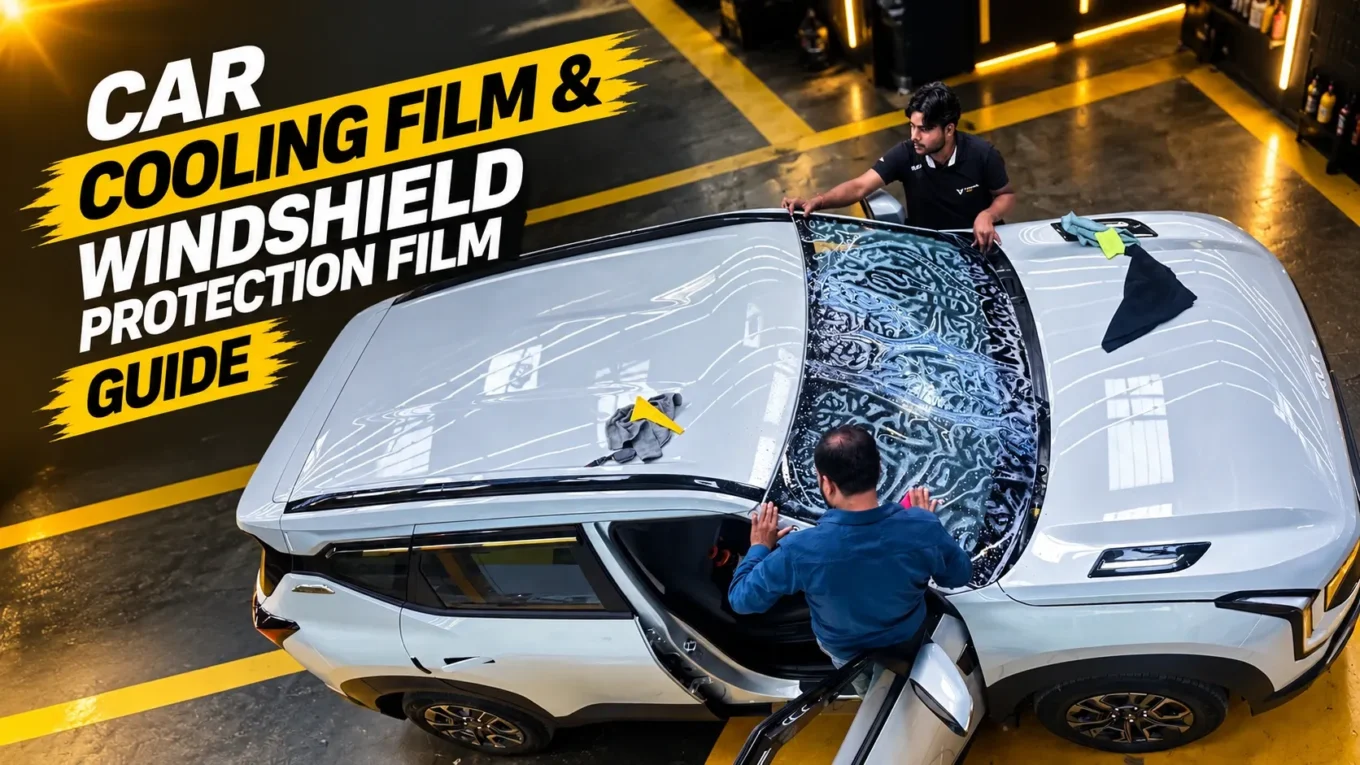
Windshield PPF, car cooling film, window tint and UV film are different products with different jobs. Windshield PPF protects glass from scratches and small road debris. Car cooling film is designed to reduce solar heat entering the cabin. Tint changes light transmission and appearance. UV film reduces ultraviolet radiation. In India, adding film to vehicle safety glass is regulated, so confirm the current rules and your car’s glass compliance before installation.
We put a lot of effort into protecting our car’s paint, but the windshield and windows face the same flying stones, dust, strong sun and accidental scratches. A damaged windshield can be expensive to replace, and a hot cabin makes summer drives uncomfortable. That’s why more owners are asking about windshield protection film, car cooling film, window tint and UV film.
What Is Windshield PPF, and What Does It Protect Against?
Windshield PPF, also called windshield protection film, is a transparent film made for automotive glass. Unlike body PPF, a windshield-grade film must account for optical clarity, wiper movement and driving visibility.
Depending on the product, it may help reduce:
No film can guarantee protection against cracks or major stone impacts. Use only a product designed for windshields, and verify visibility, compatibility and legal requirements before installation.
What Is Car Cooling Film, and Does It Really Reduce Heat?
Car cooling film, also called heat-rejection or solar control film, is designed to reduce the solar heat that passes through your car’s glass. Many modern cooling films are built to block a large share of infrared and UV rays while staying fairly clear, so the cabin can feel more comfortable without looking very dark.
When you compare cooling films, don’t rely on darkness or marketing terms. Ask for these figures from the manufacturer’s data sheet:
Results vary by film, glass type, weather and vehicle, and a cooling film won’t replace your air conditioning. It can help the cabin stay more comfortable in strong sun.
What Does Car Window Tint Do?
Window tint films are mainly associated with privacy, a darker look and less sunlight entering the cabin. Some specialised films reject solar heat without looking very dark, which overlaps with cooling film.
Does UV Protection Film Reduce Cabin Heat?
UV protection film reduces ultraviolet radiation entering through the glass. Some products also reject infrared or solar heat, but these are separate performance measures.
A UV film may help with:
Not every UV film noticeably lowers cabin temperature, so look for independent performance data instead of advertising claims.
Windshield PPF vs Car Cooling Film vs Tint vs UV Film
Product | Primary purpose | Key point |
Windshield PPF | Physical surface protection for glass | Must meet clarity and visibility needs |
Car cooling film | Reduces solar heat entering the cabin | Check TSER, IR rejection and VLT figures |
Window tint | Changes light transmission and appearance | Legality is a major concern in India |
UV protection film | Reduces UV transmission | Some versions also reject solar heat |
Choose by your priority: stone-chip and scratch protection, cabin comfort, privacy or UV protection.
Get Windshield and Window Glass Protection at Detailing Bull
Detailing Bull offers windshield protection film, car cooling film, window tint and UV protection film. Our team helps you choose by product specifications, application suitability and realistic expectations, not just popular names.
Before booking, we’ll discuss:
Contact Detailing Bull to enquire about windshield protection film and car cooling film for your car.
Website: https://detailingbull.in/
Frequently Asked Questions
What is car cooling film?
Car cooling film is a heat-rejection window film that reduces the solar heat, infrared and UV radiation entering the cabin. Performance varies by product, so check the data sheet.
Does car cooling film really work?
It can make the cabin more comfortable in strong sun, but results depend on the film, glass and conditions. It doesn’t replace your air conditioning.
Is windshield PPF the same as car body PPF?
No. Windshield film is made for glass and has different optical and durability requirements from paint PPF.
Is cooling film or UV film legal on car windows in India?
Transparency alone doesn’t make it legal. Additional films on safety glass are regulated, so check the current rules and your car’s glass compliance first.
Which film is best for reducing cabin heat?
Look for verified TSER and infrared rejection figures, not just tint darkness or UV-blocking claims. Any option must also comply with glazing rules.
Will windshield film affect my wipers or night driving?
It can if the product isn’t suitable. Ask about clarity, glare and wiper compatibility before installation.
How much does car cooling film cost?
It depends on the film, vehicle and glass area.
