
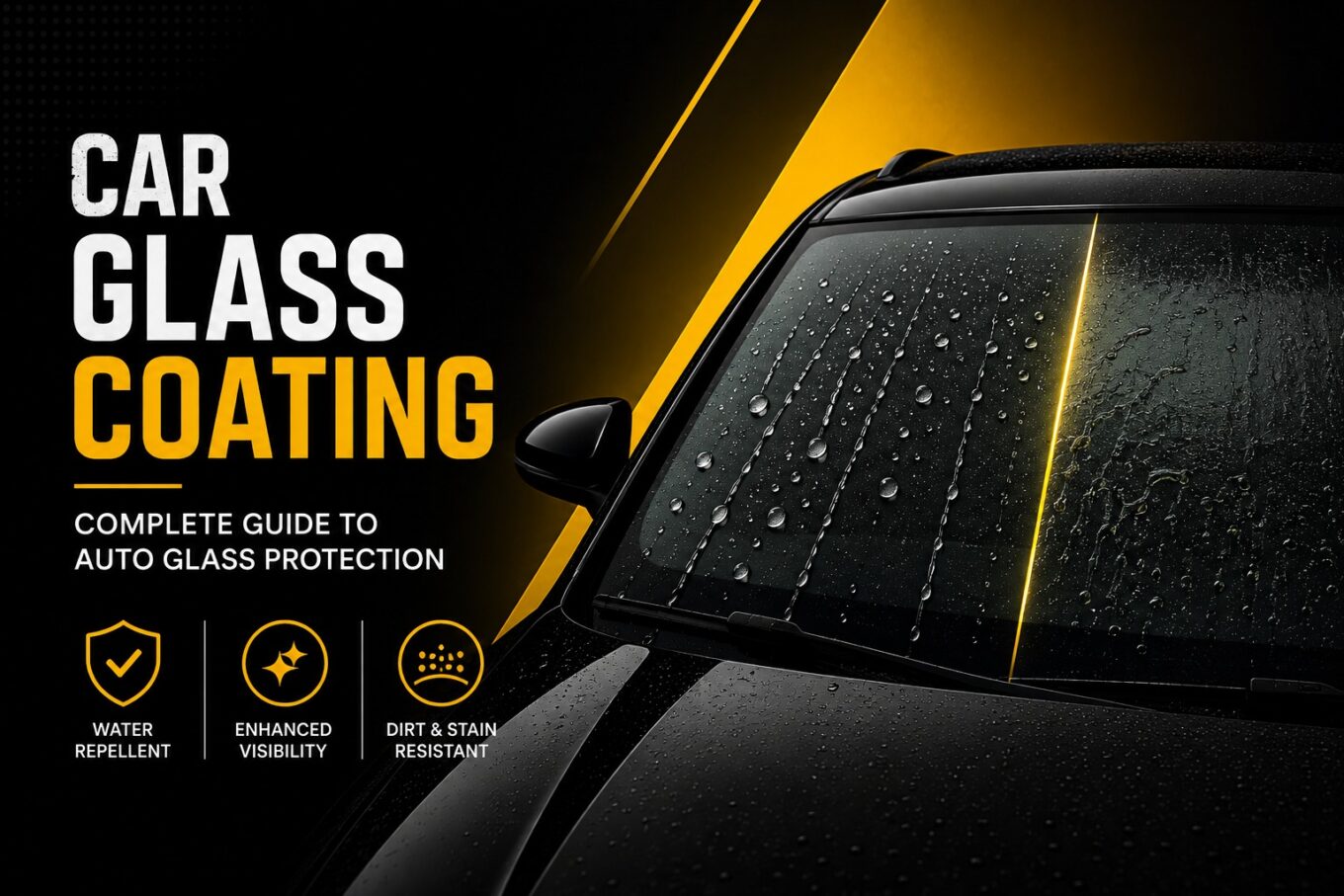
Clear glass is an important part of safe and comfortable driving. However, windshields and other vehicle glass are exposed to rain, dust, road dirt, oil, insects, water marks, and other contaminants every day. Over time, these contaminants can make the glass look dull and can make driving in rain more difficult.
Car glass coating provides a practical way to protect automotive glass and make it easier to maintain. A good glass coating creates a water-repellent surface that helps rain and water move away from the glass instead of spreading across it.
What Is Car Glass Coating?
Car glass coating is a protective treatment applied to the exterior glass surfaces of a vehicle. The coating forms a thin protective layer over the glass and changes how water interacts with the surface.
When water reaches untreated glass, it can spread into a thin layer. With a quality coating, water forms small droplets and moves away more easily when the vehicle is moving.
This is why car glass coating is also commonly called auto glass coating, automotive glass coating, or vehicle glass coating.
The treatment can be applied to suitable glass areas such as:
The exact areas covered depend on the coating product and the application process.
How Does Automotive Glass Coating Work?
The main purpose of automotive glass coating is to create a hydrophobic surface. Hydrophobic means that the surface does not easily allow water to spread across it.
After proper preparation and application, water tends to form small droplets rather than creating a wide film over the glass. During driving, airflow can help move these droplets away, especially at higher speeds.
This can be particularly useful during monsoon weather and heavy rain.
However, glass coating does not replace windshield wipers. Wipers are still important for removing water, dirt, and other contaminants from the windshield.
Benefits of Car Glass Coating
1. Better Water Repellency
The most noticeable benefit is improved water repellency. Rainwater can bead up and move across the glass more easily.
A hydrophobic windshield coating can be especially useful for drivers who frequently drive during rainy conditions.
2. Easier Glass Cleaning
Dirt and water deposits can become difficult to remove from untreated glass. A properly maintained coating can make the surface easier to clean.
Road grime, insects, dust, and other contaminants are less likely to remain strongly attached to a smooth coated surface.
3. Better Visibility During Rain
Rain can reduce visibility, particularly at night or during heavy showers. A coated windshield can help water move away from the surface more effectively.
This may help maintain a clearer view of the road, although visibility also depends on the condition of the windshield, wipers, lighting, weather, and driving conditions.
4. Reduced Water Spot Formation
Minerals present in water can leave spots on automotive glass after the water evaporates. Regular cleaning is still necessary, but a quality coating can make the glass easier to maintain.
5. A Cleaner Glass Surface
A clean windshield improves the overall appearance of a vehicle. Coated glass can remain easier to maintain when combined with proper washing and regular glass cleaning.
Hydrophobic Windshield Coating: Is It Worth It?
A hydrophobic windshield coating can be a useful upgrade for drivers who regularly face rain, dust, road grime, and difficult glass cleaning.
It is particularly useful for vehicles that are driven frequently or kept outdoors.
The coating should not be selected only because of a high water-beading claim. Product quality, glass preparation, application technique, curing, and maintenance all affect the final result.
A professional application can also reduce the chance of uneven coverage, streaking, or bonding problems caused by poor preparation.
Coating for Windshield: What Should Be Done Before Application?
Proper preparation is one of the most important parts of a glass coating process.
Before applying a coating for the windshield, we recommend thoroughly cleaning the glass and removing contaminants that can interfere with bonding.
Depending on the condition of the windshield, preparation may include:
- Cleaning the glass with a suitable glass cleaner.
- Removing dust, oil, and road contamination.
- Removing mineral deposits or existing water marks where required.
- Deep cleaning the glass when contamination is severe.
- Drying the surface completely.
- Checking the glass for scratches, chips, or existing damage.
- Applying the coating evenly according to the product instructions.
- Allowing the coating to cure properly.
The glass should be properly prepared before coating. Applying a protective product over contamination can affect the finish and durability.
Car Glass Coating vs Regular Glass Cleaning
Regular glass cleaning and glass coating serve different purposes.
Glass cleaning removes dirt, fingerprints, oil, dust, and other contaminants from the surface. It is part of routine vehicle maintenance.
Car glass coating, on the other hand, adds a protective layer designed to change the surface properties of the glass.
The best results come from using both. A coating does not mean that the windshield never needs cleaning.
How Long Does Vehicle Glass Coating Last?
The lifespan of vehicle glass coating depends on several factors, including the coating formulation, preparation, application quality, weather exposure, windshield wiper use, cleaning products, and driving conditions.
Frequent use of harsh cleaners or abrasive methods can reduce coating performance.
Instead of relying on a fixed period for every vehicle, coating performance should be judged based on the manufacturer’s recommended maintenance schedule and the condition of the treated glass.
How to Maintain Automotive Glass Coating
Proper maintenance can help preserve the coating for longer.
We recommend:
Worn wiper blades should also be replaced. A coating cannot compensate for damaged or dirty wiper blades.
Who Should Consider Car Glass Coating?
Car glass coating can be useful for many types of vehicle owners, especially those who:
For premium vehicles, maintaining clean and well-protected glass also complements the overall detailing and appearance of the vehicle.
Why Professional Glass Coating Application Matters
The quality of the final result depends heavily on preparation and application.
Glass must be clean before the coating is applied. Even small amounts of oil, residue, dust, or mineral deposits can affect the finish.
We focus on proper surface preparation, controlled application, and appropriate curing so that the coating bonds correctly with the glass.
Professional application also allows the glass to be inspected before treatment. Existing scratches, chips, contamination, or other problems can be identified instead of being covered without inspection.
Car Glass Coating by Detailing Bull
At Detailing Bull, we provide professional car detailing and vehicle protection solutions with a focus on proper surface preparation and quality workmanship. Our approach is based on understanding the condition of the vehicle before recommending a suitable protection treatment. For customers looking to keep their vehicle glass cleaner, more water-repellent, and easier to maintain, our car glass coating service can be considered as part of a complete vehicle care routine. With experience working on a large number of vehicles, we focus on delivering a clean finish and professional application rather than simply applying a product.
Final Thoughts
Car glass coating is a simple but useful protection upgrade for exterior automotive glass. By creating a hydrophobic surface, it can help water bead and move away more easily while making routine glass maintenance easier.
A good auto glass coating should be applied only after proper glass preparation and should be maintained with suitable cleaning methods. For drivers who regularly deal with rain, road dirt, water marks, and difficult windshield cleaning, professional glass coating can be a practical addition to their vehicle care routine.
Frequently Asked Questions About Car Glass Coating
1. What is car glass coating?
Car glass coating is a protective treatment applied to exterior vehicle glass. It creates a hydrophobic surface that helps water form droplets and move away from the glass more easily.
2. Is car glass coating suitable for windshields?
Yes. A suitable coating for windshields can be applied to compatible automotive glass. Proper preparation and application are important for achieving an even finish.
3. Does hydrophobic windshield coating improve visibility in rain?
A hydrophobic windshield coating can help water move away from the glass more easily, which may help maintain visibility during rain. However, it does not replace good wiper blades or safe driving practices.
4. How long does automotive glass coating last?
The durability varies according to the product, application, weather exposure, cleaning methods, wiper use, and maintenance. The manufacturer’s recommended maintenance instructions should be followed.
5. Does vehicle glass coating mean the windshield does not need cleaning?
No. Vehicle glass coating does not eliminate the need for regular cleaning. It is designed to make the surface more water-repellent and easier to maintain, while routine cleaning remains necessary.
