
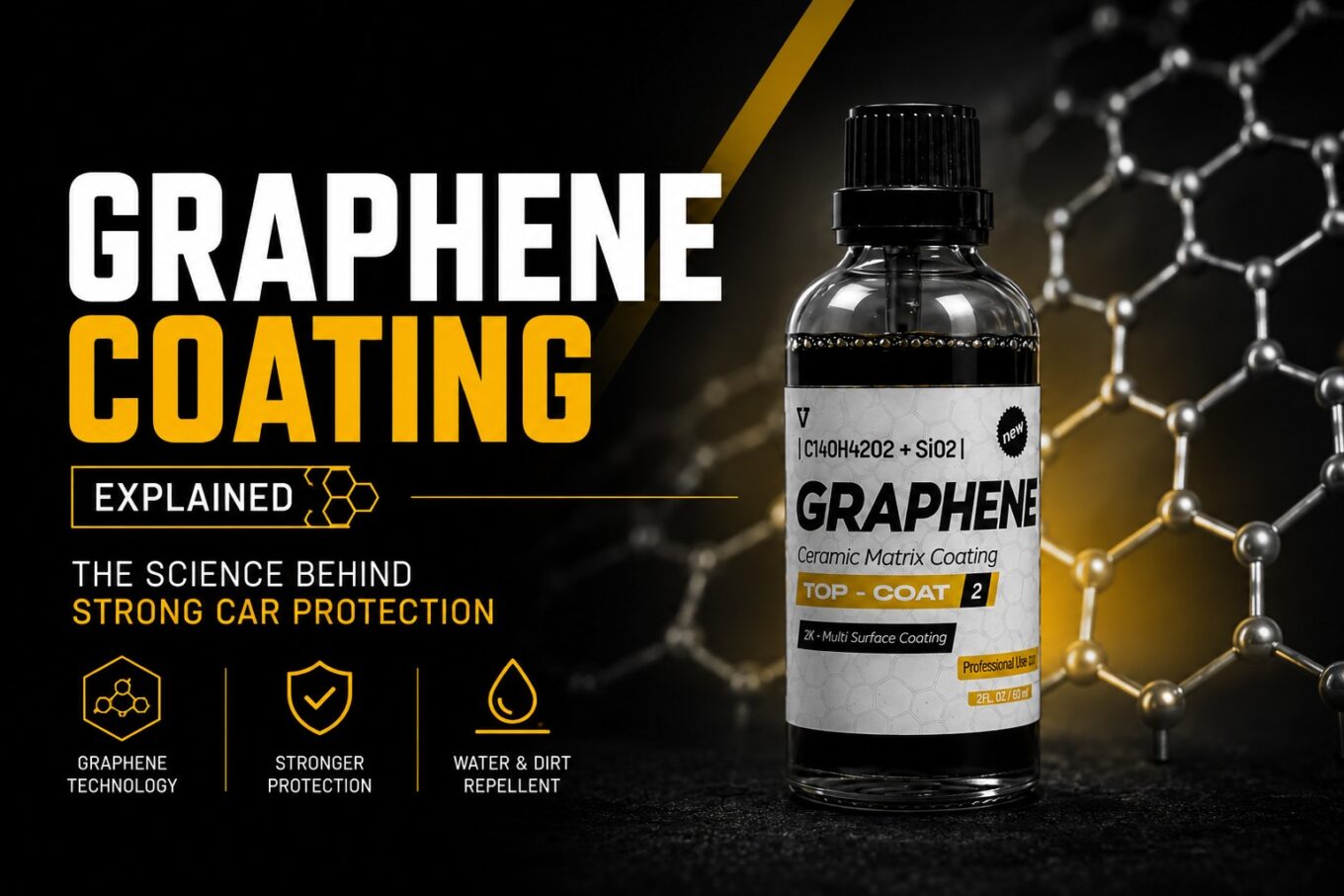
A car’s paint faces many problems every day. Dust, road dirt, sunlight, water spots, bird droppings, pollution, and regular washing can slowly affect its finish. This is where graphene coating for cars has gained attention.
Graphene coating is a modern paint protection solution that combines coating technology with graphene-based materials. It is said to provide a protective layer on top of the paint of the car, while making the glossiness, water resistance, and cleaning process easier.
But what is graphene coating and does it provide superior protection than regular coatings? So, let’s explore the physics that underlies graphene coating, its benefits and limitations in layman words.
What Is Graphene Coating for Cars?
Graphene coating is a type of protective coating applied to a vehicle’s exterior paint. It uses a coating formula that contains graphene-related material or graphene derivatives.
Graphene itself is a very thin form of carbon made of atoms arranged in a strong honeycomb structure. It is known for its strength, conductivity, and durability.
In automotive coatings, graphene is not simply placed on the car as a sheet. Instead, graphene-based material is incorporated into a coating formula. Once applied and cured correctly, the coating forms a protective layer on the vehicle’s painted surface.
The main purpose is to help protect the paint from everyday environmental exposure while making the surface easier to maintain.
How Does Graphene Coating Work?
Before applying graphene coating, the paint needs proper preparation. The surface is usually washed, cleaned, and inspected. If the paint has scratches, oxidation, swirl marks, or other defects, paint correction may be recommended before coating.
Once the surface is properly prepared, the coating is carefully applied in small sections. After application, the coating begins to bond and cure on the paint. The result is a thin protective layer over the original clear coat.
This layer can provide:
The quality of the final result depends heavily on surface preparation, coating quality, and professional application.
Main Benefits of Graphene Coating
1. Strong Water Repellency
One of the most visible benefits is hydrophobic behaviour. Water tends to form beads and move away from the coated surface instead of spreading across the paint.
This can make washing easier because water and loose dirt are less likely to remain on the surface.
2. Easier Car Maintenance
A coated car can be easier to clean because the surface becomes more resistant to dirt sticking strongly to the paint.
However, graphene coating does not make a car self-cleaning. Regular washing using the correct methods is still important.
3. Deep Gloss and Better Finish
A professionally applied coating can improve the visual appearance of properly prepared paint. On a well-maintained vehicle, graphene coating can give the surface a smooth, clean, and glossy appearance.
The coating does not repair damaged paint. The condition of the paint underneath still plays a major role in the final finish.
4. Protection Against Environmental Contaminants
Cars are regularly exposed to pollution, road grime, bird droppings, tree sap, and other contaminants.
A good coating provides an additional protective barrier between these contaminants and the vehicle’s paint, giving owners more time to safely remove contaminants before they affect the finish.
5. Improved Surface Slickness
Graphene-based coatings can create a smooth-feeling surface. This slickness can reduce the amount of dirt that remains attached to the paint and can make routine cleaning more convenient.
Is Graphene Coating Scratch Proof?
No coating can make a car completely scratch-proof.
This is an important point for car owners. Graphene coating can provide some additional surface protection, but it cannot prevent all scratches, stone chips, or physical damage.
Keys, sharp objects, careless washing, road debris, and other hard impacts can still damage the paint.
For stronger protection against stone chips and physical impact, a paint protection film such as PPF is generally a more suitable solution.
Graphene Coating vs Ceramic Coating
Graphene and ceramic coatings are both used for paint protection, but their formulations and technology can differ.
Ceramic coatings are commonly based on silica or silicon-based chemistry and are known for their hardness, gloss, and hydrophobic properties.
Graphene coatings use graphene-related material within the coating formulation and are marketed for additional surface performance and durability.
The best option depends on the vehicle, paint condition, expected usage, and owner’s maintenance habits. The quality of the product and application process often matters more than simply choosing a coating based on its name.
How Long Does Graphene Coating Last?
The durability of graphene coating depends on the product, number of layers, preparation, climate, driving conditions, and maintenance.
A professionally applied premium coating can last for years when maintained correctly, but it should not be treated as a permanent shield.
Regular washing, safe drying methods, and recommended maintenance products can help preserve its performance.
Why Professional Application Matters
Graphene coating isn’t just about slapping a product on to a vehicle.
The paint must be spot clean and free of oil or other impurities. Any flaws present will have to be corrected before application. A uniform application of the coating, and curing under proper conditions, is also necessary.
Poor preparation can affect bonding and final look.
That is why professional car detailing and graphene coating services can make a major difference to the final result.
Graphene Coating Maintenance Tips
To maintain a graphene-coated car:
- Wash the vehicle regularly.
- Use pH-balanced car shampoo.
- Avoid harsh household detergents.
- Use clean microfiber towels.
- Do not scrub the paint aggressively.
- Remove bird droppings and tree sap as soon as possible.
- Follow the coating manufacturer’s maintenance recommendations.
- Consider professional inspection and maintenance when required.
Graphene Coating at Detailing Bull
At Detailing Bull, we focus on proper vehicle preparation before applying paint protection solutions. Our detailing process is designed around the actual condition of the vehicle rather than treating every car in the same way. From surface cleaning and paint preparation to professional coating application, the aim is to provide a clean finish, better surface protection, and easier maintenance for car owners who want to keep their vehicles looking their best.
Final Thoughts
Graphene coating is a new technique in the paint protection world which can improve water repellency, surface slickness, gloss and daily paint protection. But it’s not a magic shield and shouldn’t be advertized as entirely scratch proof or damage proof.
The best results come from combining a quality coating with proper paint preparation, professional application, and regular maintenance.
For owners who want to protect their car’s appearance and make regular cleaning easier, graphene coating can be a practical addition to a professional car detailing routine.
FAQ About Car Detailing
1. Is graphene coating better than ceramic coating?
Both provide great paint protection. Graphene coatings are the integration of graphene related materials in the formulation Ceramic coatings are often silica based chemistry. The better choice depends on the product, the state of the vehicle, and the quality of application.
2. Does graphene coating prevent scratches?
No. Graphene coating can offer some surface protection, but it is not a foolproof solution against all scratches, stone chipping or physical damages. If impact protection is your primary concern, then PPF is your best bet.
3. How long does graphene coating last?
Life of the coating product is determined by application, weather, driving conditions and maintenance. When properly maintained, a professionally placed coating can give years of protection.
4. Can graphene coating be applied to a new car?
Yes. A new car can benefit from graphene coating, but the paint should still be properly cleaned and inspected before application. Any surface contamination or defects should be addressed first.
5. Is graphene coating worth it for a luxury car?
For owners who want easier maintenance, strong water repellency and a glossy finish, graphene coating can be a worthwhile option. The right protection should be selected based on how the vehicle is driven, stored and maintained.
