
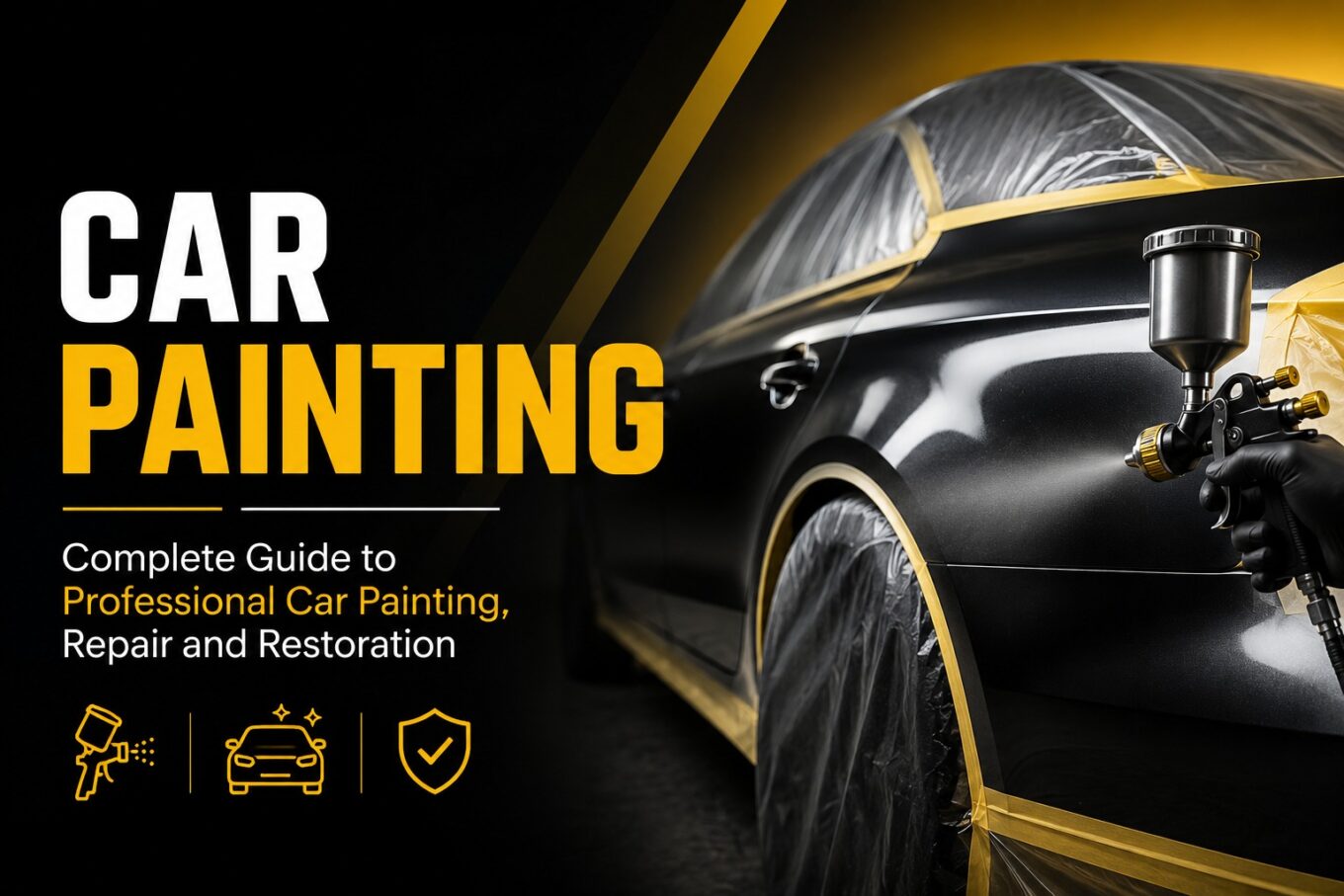
Car painting is an important part of restoring a vehicle after scratches, dents, accidents, faded paint, or other body damage. A professional paint job can improve the appearance of a car and help restore damaged panels to a finish that closely matches the rest of the vehicle.
But a nicely painted car is more than simply fresh paint. Proper dent repair, surface preparation, colour matching, paint application and finishing all contribute to a clean and durable result.
What Is Car Painting?
Car painting is the process of painting and restoring the painted surfaces of an automobile. Depending on the condition of the car, the process can include dent repair, removal of damaged paint, sanding, priming, colour matching, paint spraying, clear coating and final polishing.
A professional car paint shop first checks the condition of the damaged area before deciding whether one panel, several panels, or the entire vehicle needs repainting.
When Does a Car Need Repainting?
A full paint job is not necessary for every scratch. However, if the paint or underlying surface has been damaged, expert painting might be necessary.
Common situations include:
Early inspection is useful because exposed metal can develop rust if damage is left untreated.
How Professional Car Painting Works
A professional car body shop generally follows a structured process to achieve a smooth and consistent finish.
1. Vehicle Inspection
First we will take a look at the damaged panel and the surrounding areas. This allows us to view the state of the paint, dents, scratches, rust and panel alignment. From the damages we can see if the vehicle needs a minor repair, painting or a more complete restoration.
2. Dent and Body Repair
Painting should begin only after the body has been properly repaired. For car dent paint work, dents are restored as closely as possible to their original shape before the surface is prepared for painting.
Severely damaged panels may require additional repair or replacement before painting.
3. Surface Preparation
The damaged surface is cleaned and sanded to get rid of any loose paint or flaws. This stage is very crucial, because inadequate preparation might result in an uneven surface, obvious scratches, or problems with paint application. Adhesion problems.
4. Primer Application
Primer gives a suitable basis for the paint and aids with improved adhesion. This is particularly the case where the repair exposes metal or other underlying surfaces.
5. Colour Matching
One of the most crucial phases of the process is to match the new paint to the existing hue of the car. We mix the colour based on the manufacturer’s paint code, age of the vehicle, current state of the paint and amount of sunshine exposure.
If the colour is matched properly, the restored panel will blend in seamlessly with the surrounding sections.
6. Paint and Clear Coat
The chosen paint is applied using professional equipment and under controlled conditions. More than one application may be required depending on the repair.
Then a clear coat is sprayed over the colour layer to give the appropriate finish and further surface protection.
7. Final Inspection and Finishing
After the paint has properly cured, the repaired area is inspected for imperfections. Finishing and polishing may be carried out where required to improve gloss and consistency.
Single-Panel Painting or Full Car Repainting?
The right option depends on the condition of the vehicle.
If damage is limited to one panel, single-panel painting may be enough. This can be a practical solution for a damaged door, bumper, fender, or other individual component.
If several panels have faded or damaged paint, or the owner wants a complete colour change, full car repainting may be more suitable.
A professional inspection should be carried out before deciding which option is appropriate.
How Much Does Car Painting Cost?
The cost of car painting varies according to several factors, including:
A single-panel repair will generally require less work than a complete repaint. For an accurate estimate, the vehicle should be physically inspected rather than relying only on an online price
How Long Does Car Painting Take?
The time required depends on the amount of damage and the number of panels involved. A small repair may take significantly less time than a complete repaint involving extensive bodywork.
Proper preparation, painting, drying or curing, and final inspection all need sufficient time. Rushing any of these stages can affect the quality of the finished result.
How to Choose the Right Car Paint Shop
Choosing the right car paint shop is important for achieving a professional finish. Before selecting a workshop, consider:
A reliable auto body shop should be able to handle both body repairs and professional paint refinishing instead of treating painting as a separate cosmetic job.
Car Painting and Professional Detailing
At Detailing Bull we know that repairing a vehicle is more than making a broken panel appear fresh. A good body repair, paint prep, finish and a professional detail can all contribute to the overall appearance of a car. For owners who want to preserve the finish after repair we can also recommend appropriate paint protection and maintenance solutions depending on the state and use of the vehicle.
How to Maintain Newly Painted Car Paint
Proper care can help to preserve the finish after professional painting. Wash the automobile with proper materials, do not use aggressive washing methods, remove impurities quickly and follow the advice of the workshop as far as washing and maintenance once the paint has healed.
Regular professional detailing can also help to maintain the car looking its best for a long period.
FAQ About Car Detailing
1. Can only one panel of a car be painted?
Yes. If the damage is only to one panel, professional technicians can often repair and repaint that panel while matching it with the surrounding paint.
2. How much does it cost to paint a car?
The cost depends on the number of panels, damage level, paint type, preparation work, vehicle model, and finishing requirements. A physical inspection is the best way to receive an accurate estimate.
3. How long does car painting take?
It depends on the extent of damage and the number of panels involved. Minor repairs are generally quicker than extensive body repairs or complete repainting.
4. Is repainting better than repairing a scratch?
It depends on the depth of the scratch. Minor surface marks may not require repainting, while deep scratches that have affected the paint or metal may require professional repair and painting.
5. How do we choose the best auto body shop?
Look for an experienced auto body shop with skilled technicians, proper equipment, good colour-matching capabilities, positive customer feedback, and a strong record of previous work.
